Keynote Speakers
Professor, Director of the Design Stream, and Professor-in-Charge of the Design & Human Factors Lab in the School of Mechanical & Aerospace Engineering, Nanyang Technological University, Singapore.

Speech Title:AI-assisted Human Factors in Intelligent Traffic Management Systems
Chun-Hsien CHEN is Full Professor, Director of the Design Stream, and Professor-in-Charge of the Design & Human Factors Lab in the School of Mechanical & Aerospace Engineering, Nanyang Technological University, Singapore. He received his BS degree in Industrial Design from National Cheng Kung University, Taiwan, MS and Ph.D. degrees in Industrial Engineering from the University of Missouri-Columbia, USA. He has several years of product design & development experience in the industry.
His teaching and research interests are design science in product design and development; engineering/design informatics for managing/ supporting digital design & manufacturing; and human factors and management of human performance. He has more than 300 publications in these areas. Prof. Chen has served as a Technical Reviewer for National Science and Technology Awards (Singapore), National Research Foundation of Korea, The Knowledge Foundation (KK) HÖG 16 Project, Sweden, and a Judge for Pin Up Design Awards (South Korea), an Advisory Board member for ISTE (International Society of Transdisciplinary Engineering), an Advisory Committee member for various international conferences. Prof. Chen has been appointed as Co-Editor-in-Chief of Advanced Engineering Informatics (ADVEI) since January 2013 (till 2025) and Associate Editor of Space Mission Planning & Operations (SMPO) since August 2022. Besides, he is an editorial board member of Journal of Engineering Design (since 2022), and Recent Patents on Engineering (since 2007). He has been listed in the World’s Top 2% Scientists by Stanford University (2022 – 2025).
The G.W. Woodruff School of Mechanical Engineering, Georgia Institute of Technology, Atlanta, USA. Managing Director, JF InnoTech LLC, Atlanta, USA
Editor-in-Chief, Journal of Engineering Design, Taylor & Francis, UK

Speech Title:Augmented Intelligence (AI+) for Human-Automation Symbiosis: A Transdisciplinary Engineering Perspective
Technological advances are shaping the future of work in response to Industry 5.0, which significantly intensifies the challenges facing human workers to perform in today’s complex operational environments related to manufacturing and service industries. This leads to a growing reliance on automation, involving both hardware and software coevolution to support and enhance human physical and cognitive capabilities. Successful team performance for effectively executing cognitively complex tasks such as smart manufacturing become even more dependent on team cognition that requires collaboration (cooperation, competition, and coordination) to address the contexts of both human-human and human-automation teams. Envisioning the importance of collaborative cognition as one of the fundamental ways to bolster human cognition through human-automation interaction, this talk will introduce the state-of-the-art research in the field of augmenting collaborative cognition from an analytic and model-based transdisciplinary engineering perspective. The emerging trend is to incorporate human cognitive capabilities or human-like cognitive models into AI systems to develop a new form of AI, that is, augmented intelligence (AI+). This form of AI or machine intelligence is a feasible and important developing model. This talk describes a basic framework of AI+ for cyber-physical-human collaborative cognition and the basic elements of AI+ based on cognitive computing. These elements include intuitive reasoning, causal models, evolution of memory and knowledge, especially the role and basic principles of intuitive reasoning for complex problem solving, and the cognitive learning framework for visual scene understanding based on memory and reasoning. Several typical applications of AI+ in related fields will be overviewed, along with research challenges and new opportunities for transdisciplinary engineering.
Dr. Jianxin (Roger) Jiao is Associate Professor of Design and Industrial Systems Engineering in the G.W. Woodruff School of Mechanical Engineering at Georgia Institute of Technology, Atlanta, USA. He is Editor-in-Chief of Journal of Engineering Design, a flagship journal in the design field and published by Taylor & Francis. He is Managing Director of JF InnoTech LLC, USA, a technology company specialized in industrial AI solutions for smart manufacturing and operations. Before joining Georgia Tech, he was Assistant Professor and then Associate Professor of Systems and Engineering Management in the School of Mechanical and Production Engineering at Nanyang Technological University in Singapore. He earned his Ph.D in Industrial Engineering at Hong Kong University of Science & Technology, M.S. in Intelligent Manufacturing at Tianjin University, and B.S. in Mechanical Engineering at Tianjin University of Science & Technology in China. His research interests include design systems engineering, manufacturing systems, and intelligent decision making.
More information about his research @ Google Scholar http://scholar.google.com/citations?user=9yikEHAAAAAJ&hl
Professor, ATLAS Institute & Computer Science, University of Colorado Boulder, USA

Speech Title: The Architecture of Enchantment: Creative Technology and Design with Mind, Might and Magic
Ellen Yi-Luen Do (Professor, ATLAS Institute & Computer Science, University of Colorado Boulder, USA) invents at the intersections of people, design, and technology. She works on computational tools for design, especially sketching, creativity, and design cognition, including creativity support tools and design studies, tangible and embedded interaction, and computing for health and wellness.
She holds a Ph.D. in Design Computing from Georgia Institute of Technology, a Master of Design Studies from the Harvard Graduate School of Design, and a bachelor's degree from National Cheng Kung University in Taiwan. She has served on the faculties of the University of Washington, Carnegie Mellon University, and Georgia Institute of Technology. She co-directed the Keio-NUS CUTE Center in Singapore (2013 - 2016), a research unit investigating Connected Ubiquitous Technology for Embodiments. Ellen has published over 170 papers and raised over $11M in research funding. She was Design Community Chair for ACM CHI (2012 and 2013), and currently serves on the Steering Committees for ACM Conference series of TEI (Tangible, Embedded and Embodied Interaction) and C&C (Creativity & Cognition), ISWC (International Symposium on Wearable Computers), and AH (Augmented Human), and on the editorial board for AIEDAM (Artificial Intelligence for Engineering Design, Analysis and Manufacturing), Springer Series on Cultural Computing, and AUSMT.
Professor in the Department of Design at National Taiwan University of Science and Technology
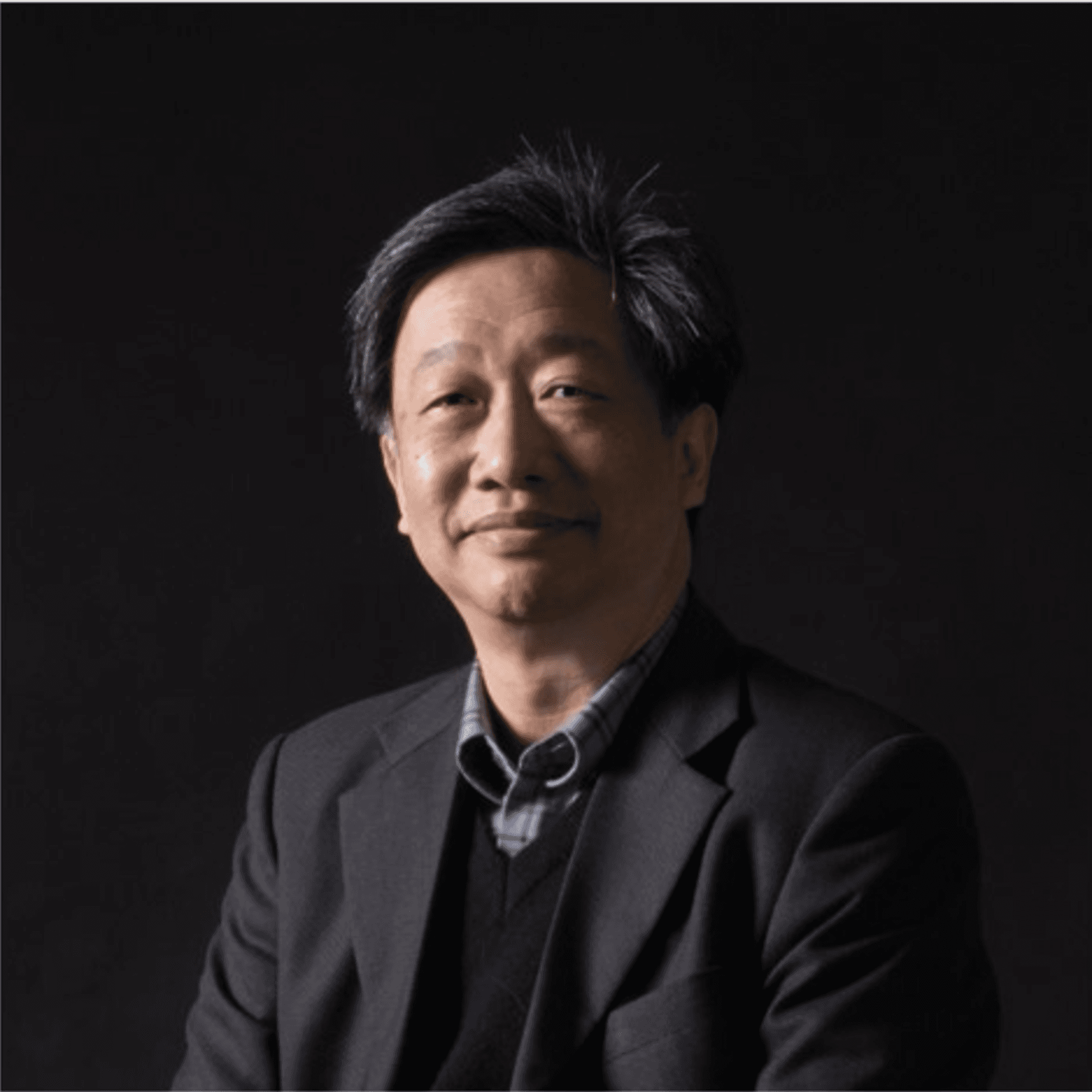
Speech Title: Designing Futures: Empowering Human and Intelligent Agency Through Interaction and Experience
The future of design needs to move beyond just focusing on usability and efficiency, aiming instead for genuine empowerment—where technology not only simplifies tasks but also actively supports human creativity and decision-making. This represents a shift from tools that merely assist us to systems that enhance our abilities. Central to this change is the concept of co-agency with AI: creating environments where humans and intelligent agents work together as partners,
complementing each other's strengths rather than competing. However, this partnership requires ethical considerations and responsibility. Intelligent systems must honor human values, protect privacy, and maintain dignity. The future of design is clear: to create experiences that do more than operate effectively—they must enhance human potential, helping us flourish in a world shaped by intelligent machines.
Dr. Chien-Hsiung Chen is a Professor in the Department of Design at the National Taiwan University of Science and Technology (Taiwan Tech). As of August 2024, he concurrently serves as the Vice Dean of Academic Affairs and the Director of the Center of Teaching and Learning Development at the university. His extensive administrative experience includes previous terms as Dean of the College of Design,Chairman of the Department of Design, and Dean of the Library.
Dr. Chen’s research interests bridge industrial design, human factors, and cognitive psychology. He specializes in interaction design, usability engineering, and user experience (UX) research. Recently, his work has expanded to address emerging technologies, such as investigating the impact of AI tools on team creativity, designing visual feedback for AI doctor agents, and developing user interfaces for telecare systems. He actively publishes in journals such as the International Journal of Human-Computer Interaction, Displays, etc.
In the professional community, Dr. Chen served as the President of the Chinese Institute of Design (2023–2025) and the Co-convener of the Arts Discipline for the National Science and Technology Council (2022–2024). His academic excellence wasrecognized with the Outstanding Research Teacher Award for the 2025 academicyear and the Outstanding Teaching Award in 2024. He is also a dedicated mentor,guiding students to win prestigious awards including the Red Dot, iF, and IDEAawards, while holding numerous patents for medical and assistive devices.